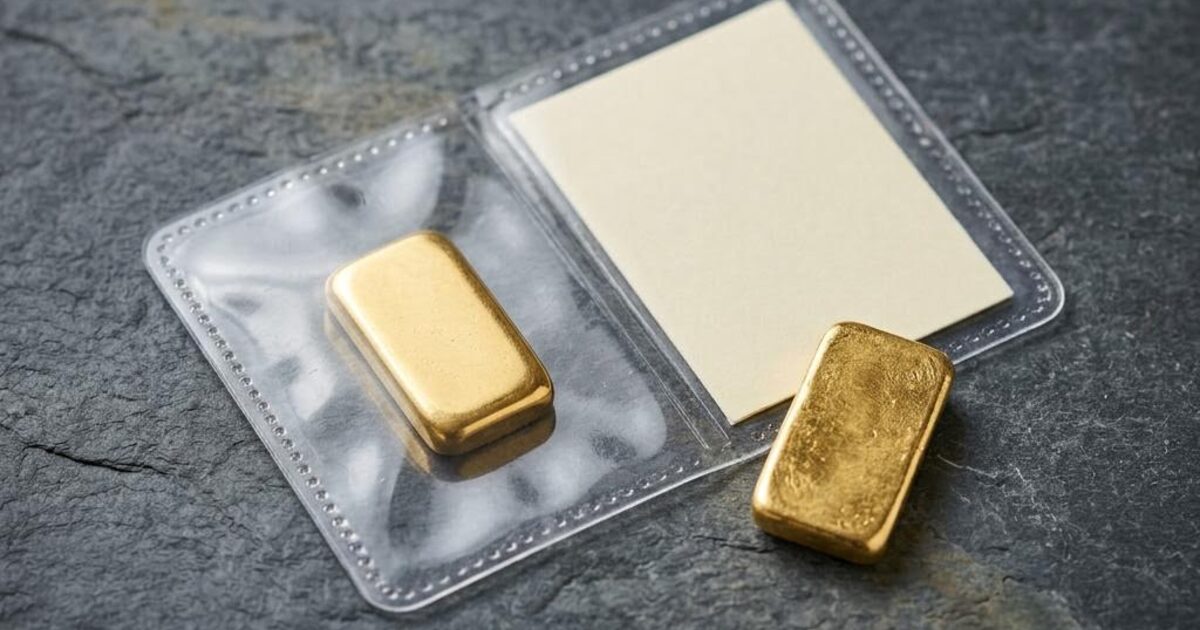
A bullion owner can see gold decline and still receive an offer that changes by a different percentage. That does not automatically prove a pricing error. A coin or bar transaction combines the underlying gold with product-specific demand, authenticity considerations, and trading costs. To compare offers intelligently, separate those components instead of assuming the spot chart explains every dollar.
Start with fine gold, not just the coin's gross weight
A product's stated fine-gold content is the relevant metal starting point. Some investment coins include alloy for durability while still containing a specified quantity of gold. Gross weight and fine-gold weight are therefore not always the same. Identification and authentication come before multiplying a scale reading by the market price.
Know which side of the market you are reading
A dealer's advertised retail asking price is the amount it seeks from a buyer. Its purchase bid is the amount it is willing to pay a seller. The difference can reflect sourcing, handling, authentication, inventory risk, and operating costs. A retail premium visible on a website does not establish that the same premium will be paid back on resale.
For context, Reuters quoted spot gold at $4,026.15 per troy ounce at 09:36 GMT on October 23, 2026. That market reference is not a retail asking price for a packaged one-ounce bar and not a guaranteed dealer bid. The December futures quote in the same report refers to a different instrument again.
Product demand can change independently
Recognizable products, denomination preferences, supply availability, packaging condition, and customer demand can influence a product's premium or discount. These effects need not have the same direction as spot. A buyer may also require additional verification for unfamiliar, damaged, or altered pieces. None of this justifies an unexplained offer; it provides questions a transparent explanation should answer.
- Confirm the exact coin or bar, issuer, stated fineness, and fine-gold content.
- Ask whether the quoted price is a bid, an ask, a spot reference, or a futures quote.
- Keep original packaging and documentation when available; do not assume packaging alone proves authenticity.
- Identify proof, scarce-date, or otherwise collectible coins before using a bullion-only calculation.
Compare the net transaction
Two offers are easiest to compare when they refer to the same product, quantity, and market time and disclose any applicable deductions. A vague promise of a large premium can be less useful than a clear final amount. For a mixed collection, separate standardized bullion from pieces needing specialist identification so one pricing method does not hide the differences.
Editorial note — researched October 23, 2026. Dated market figures are snapshots, not a live feed or a purchase offer. Forward-looking scenarios are analysis, not guarantees or personalized investment advice. Check a fresh quote before making a decision.
Selling bars or coins? Bring original assay packaging and any purchase records to Gold Buyers Connecticut so the exact products can be identified before an offer is discussed.